CFR-A Practitioner Entry first aid course visual for Irish workplace and community training

CFR-A Practitioner Entry — PHECC Accredited | Kerry, Cork & Limerick

CFR-A Practitioner Entry pathway with advanced assessment preparation for responders progressing to higher clinical responsibility.

Duration: 2 Days Certification: PHECC CFR-A Availability: On-site and Public

What This Course Covers

CFR-A Practitioner Entry is designed to move learners from theory awareness to practical execution. The course structure combines technical foundations, scenario-led rehearsal and instructor feedback loops so that teams can apply first aid actions confidently in real environments rather than only in classroom demonstration conditions.

In many organisations, first aid capability is weakened by role ambiguity and low rehearsal frequency. This programme addresses both problems directly by teaching response sequencing, escalation language and team coordination habits that remain usable under pressure.

The delivery model is adapted for Irish workplace realities in progression-focused organisations across Ireland, where shift pressure, staffing changes and operational complexity can create non-trivial response gaps unless learning is practical and repeatable.

What You Will Learn

  • Scene safety, risk triage and first response priorities
  • Primary survey flow with structured patient assessment
  • CPR standards and AED confidence-building practice
  • Bleeding, shock and trauma response sequencing
  • Medical emergency recognition and escalation thresholds
  • Communication protocols for emergency service handover
  • Post-incident reporting and quality review essentials
  • Role coordination under time pressure and uncertainty
DetailInfo
Duration2 Days
CertificationPHECC CFR-A
Cert Validity2 Years
DeliveryOn-site or Training Centre
Group SizeUp to 20 participants
LocationsKerry, Cork, Limerick, Munster

Planning insight: teams that schedule refresher rehearsal before certificate expiry typically maintain faster response speed and stronger role clarity in live incidents.

Curriculum Breakdown

This module establishes the underlying response paradigm, including legal context, situational awareness and safe action sequencing. Learners build a shared framework before progressing to practical drills.

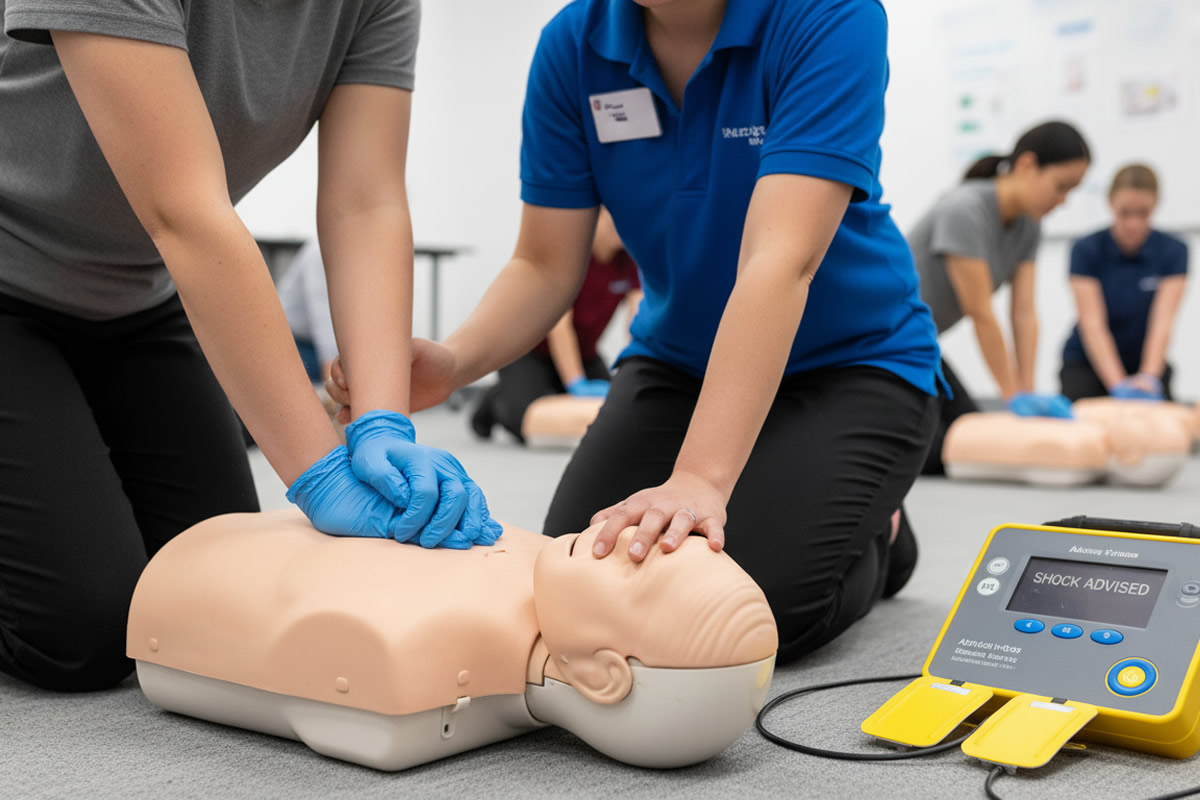
Participants complete structured drills covering CPR, AED use, trauma response and communication flow. Coaching focuses on execution quality, confidence and consistency under pressure.

Scenario-based assessments test technical competence and team interaction, ensuring learners can apply the framework in realistic conditions rather than isolated skill fragments.

Delivery Options

Choosing the right delivery format has a direct impact on learner engagement, operational disruption and long-term retention. The strongest outcomes usually come from selecting a pathway that matches your staffing model, incident profile and internal communication culture rather than choosing only on convenience.

On-Site Delivery

Ideal for teams that need training aligned to their own premises, workflow and risk profile. On-site formats reduce travel friction and improve contextual relevance. Trainers can incorporate practical walkthroughs linked to your actual evacuation routes, access constraints and incident escalation pathways.

Public Scheduled Courses

Suitable for individuals or smaller teams requiring accredited pathways with predictable scheduling and structured assessment support. Public sessions also give participants exposure to cross-sector perspectives, which often improves situational judgement during scenario discussions.

Bespoke Group Programmes

Designed for organisations requiring blended outcomes, such as first aid plus manual handling or refresher cadence planning across multiple locations. Bespoke formats are useful when leadership needs phased implementation across departments with non-trivial risk differences.

Learning Outcomes and Operational Impact

Individual Capability Gains

Participants leave the programme with stronger confidence in scene assessment, structured patient care, communication under pressure and safe escalation to emergency services. This capability is reinforced through coached repetition, not one-time demonstration, so skills remain accessible during stressful moments.

Each learner is expected to demonstrate technical accuracy alongside calm response sequencing. This dual focus reduces hesitation and improves action quality in the critical first minutes of an incident.

Team and Business Outcomes

For organisations, the resulting gains include clearer role ownership, reduced response ambiguity and better post-incident learning. Teams with routine first aid rehearsal generally show stronger coordination and faster handover quality compared with teams that train only to meet certification deadlines.

Leadership can use this course as a foundation for wider safety governance, including refresher planning, equipment readiness checks and incident debrief frameworks.

Course FAQs

Yes. We regularly deliver on-site sessions across all three counties and can align delivery with your operational schedule, room layout constraints and shift handover windows.

This course is suitable for designated first aiders, supervisors, safety leads and team members responsible for early incident response. It is also valuable for organisations building a deeper safety culture where role clarity and confident escalation are priorities.

We recommend scheduled refreshers, short scenario drills and periodic role reviews so practical capability remains strong between formal renewals. A quarterly rehearsal rhythm is often an effective baseline for maintaining confidence and consistency.

Yes. Many organisations adopt blended pathways to address emergency response and injury prevention together. Combined planning can improve attendance efficiency while strengthening overall risk control outcomes.

Related Courses

If you are comparing pathways, review related options to build a staged capability plan. Many teams start with one core programme and then layer refresher or specialist modules based on role needs, compliance goals and site-level risk analysis.

Ready to strengthen your team’s emergency response?

Group/Company bookings call us on 087 925 5497 e-mail info@kerryfirstaid.ie

Arrange on site training – call us on 087 925 5497 e-mail info@kerryfirstaid.ie

Book This Course